
Roof Dacking
When it comes to roof decking, I often tell homeowners that the time you start hearing about it is usually close to roof replacement, because this layer is the foundation and groundwork of the entire roof system. A roof is a combination of different roofing materials and components that come together to protect your home from harsh elements, and while all materials are important, the roof decking forms the base, structure, and support for the whole system. From my hands-on experience in building and construction, proper installation directly impacts durability and long-term performance, which is why it’s important to understand everything you need to know about roof decking, including its types, costs, and how much it affects overall protection and reliability.
What is Roof Decking
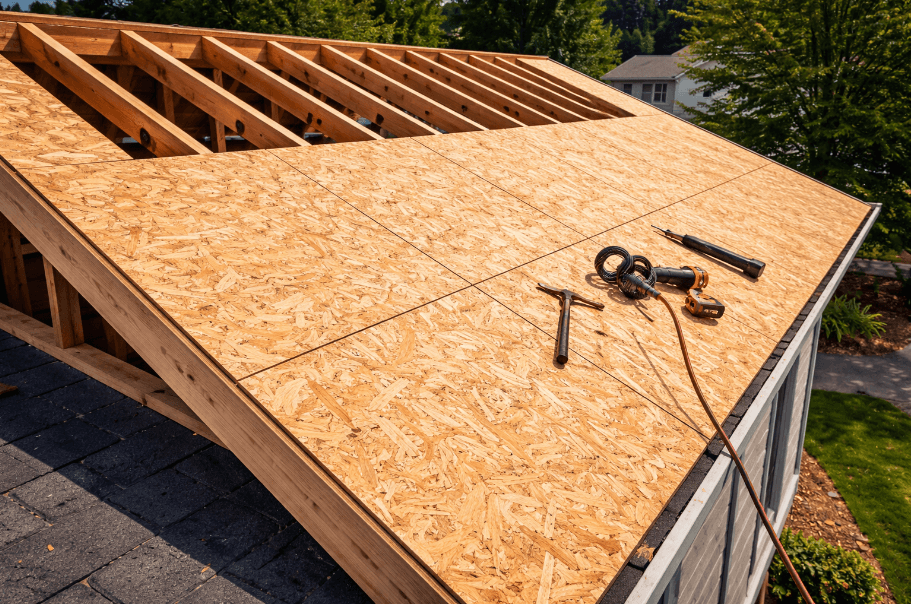
In simple terms, roof decking is the layer that supports the entire roof and holds the whole roof system together. From my hands-on experience working on homes, I see it as the foundation of a roof, made from wooden materials like wooden boards, boards, and roof boards that make up the base of the roof. This decking is part of the framing and the framing of your roof, and everything above is installed, carefully installed on and installed on boards so the structure stays strong over time. There are 2 main types of roof decking: plank decking and sheet decking, both a common type of sheathing also known as roof sheathing. While both are still seen today, sheet decking is the most commonly used and commonly used option in the United States, mainly because it provides consistent support across the entire roof.
Plank Decking
Roof plank decking was the standard choice before the invention of plywood, and in practical terms this type of deck is made from elongated and rectangular wooden boards known as planks, typically sized either 1×6 or 1×8, which were widely used in construction and are still easy to find on older homes today; while it is less common now, in real-world roofing work I’ve seen that whether these planks are reused when replacing a roof is needed only if the condition allows, and that decision usually depends on a couple of structural things that are often assessed later during inspection.
Sheet decking
Sheet decking, also called sheathing, forms the base of the roof decking system and plays a key role in the overall roofing structure of residential roofing. It is made from flat sheets or a flat sheet of wood, commonly wood sheets like plywood or OSB (oriented strand board). In today’s roofs, especially roofs today, OSB is the most common type of decking because it is made from wood chips and wood strips that are compressed into a strong panel, often 7/16” thick. Plywood is still widely used on homes and comes in different thicknesses such as ⅜”, ½”, ⅝”, and ¾”, chosen based on the span between rafters and the needs of the roofing material.
From my experience working on homes today, choosing between sheet decking types is not just about strength but also about long-term roofing choice. Both common decking options offer great options, and the final decision often depends on roofer preference, roofer’s preference, personal preference, budget, availability, wood availability, and overall material availability. In real projects, I’ve seen how the right sheet decking improves durability while keeping costs under control, especially when the choice clearly depends on budget and local supply conditions.
Does Roof Decking Need Replacement During a Roof Replacement?
During a roof replacement, the focus is not only on the shingles but also on the roof decking, which forms the roof base and substrate for all roofing layers. In most cases, contractors inspect the decking, wood decking, and decking boards during the tear-off phase while tearing off the old roof before installing a new roof. From hands-on experience in residential roofing and residential construction, it is common to see signs of rotting, moisture damage, material failure, or deterioration that affect the structural condition, structural support, and overall integrity of the underlying structure.
The challenge is that inspection limitations and the unknown extent of damage mean no one can determine the exact amount of decking that needs attention until exposure occurs. A few boards may be replaced, or a full decking replacement may be required due to integrity loss, compromised, compromised decking, or damaged decking. The replacement necessity, mandatory replacement, and necessary repairs often depend on whether the decking can still support the roofing system during the roofing process and after pre-installation checks.
No guarantee exists that decking will not be touched during a roof replacement, but matter what, addressing weak areas is absolutely crucial for roof longevity, roof lifespan, long-term performance, roof health, and home’s health. In practice, replacing, replace, or replacing decking where required ensures home protection and housing safety, while meeting building codes, code compliance, code enforcement, construction standards, and safety standards. These rules are set forth under regulatory requirements, including the 2018 International Residential Code, which guides when decking must be replaced to protect the structure.
R905.1 Roof Covering Application Explained
When discussing decking in a roof system, this section shifts the focus toward proper installation rather than the material itself. Instead, IRC R905.1 under the code explains how roof-coverings and roofing materials must be applied in accordance with applicable provisions and the manufacturer’s installation-instructions. From my field experience, following these instructions closely avoids mistakes where a roof may look finished but is not technically installed properly, which later causes serious issues.
As of 2021, shingle manufacturers added clear language stating that plank decking with more than a 1/8 gap between planks must be replaced before shingles are nailed. This simply means that gaps larger than allowed make installing shingles risky, because nails can miss solid wood and leaks happen. I have seen cases where the roof was up but not in code-compliance, and even worse, the warranty provided by the manufacturer was voided due to ignoring these rules.
R905.2.1: Roof Sheathing Requirements
In real roofing work, roof decking and the roof deck are the base of the roof, and this decking system is where the first code and the next one truly revolves around following clear instructions for how wooden planks should perform; actually, this section is about the general rule that, simply put, the surface must be considered solid before installing or installing shingles, because the roof must be strong enough to meet IRC Code R905.2.1, which sets the Roof Sheathing Requirements stating that Asphalt shingles shall be fastened solidly to sheathed decks, meaning the entire structure must be able to withstand and hold a new roof once it is installed; in practice, this means any rotten or compromised decking must be replaced according to building codes, something I have seen many times on job sites when preparing a roof for long-term performance.
How does a roofing contractor replace roof decking?
From my own job experience, roofers often replace roof decking in different ways based on the situation, sometimes they change out boards and remove the compromised area to install the same type if available in its place, whether in large affected areas or smaller affected areas, because the important thing is the rafters are not hit; in rare cases the entire roof is re-decked using sheet decking where they remove old sheets and lay new sheets over the rafters, while plank decking with too many planks, gaps, and rotting that is too widespread avoids ripping up boards by letting them nail over a type of sheet decking, which saves time, ensures a solid roof deck all the way around.
How much does roof decking cost?
When clients ask me about roof decking pricing, I explain that replacement costs usually range from $2 to $5 per square foot, or about $2,400 to $8,600 on average, and this changes depending on the size, pitch, and material of the roof. From hands-on job estimates I have handled, labor costs to install roof sheathing typically fall between $1.50 and $3.00 per square foot, while roofing plywood materials alone can cost around $0.50 to $2.00 per square foot, with the final square foot price shaped by how accessible the roof is and how much decking needs to be replaced.
FAQs
What is the decking on a roof?
Roof decking, also known as roof sheathing, is a layer of wood boards that is installed directly over the framing of the roof. In practical terms, this decking serves as a stable surface and flat surface that holds all roofing materials in place while forming the main installation layer of the roof structure. From my field experience, quality decking must be strong enough to withstand harsh winds, heavy downpours, and even the worst snowstorms, because its durability, strength, and stability directly affect long-term performance. As a critical load bearing construction material, it provides essential structural support, works as a protective base, improves weather resistance, and helps manage exterior exposure and overall climate impact on the roof.
What is the best material for roof decking?
When choosing the best material for roof decking, Typically, CDX, C-D Exposure 1, plywood is used because it balances strength and reliability in real roofing conditions. In my experience on job sites, this type of roof decking performs better than other types since its moisture-resistant front veneer helps manage short-term exposure during installation. It comes in various thicknesses, which makes it easy to cut to the right size, fit complex layouts, and handle unique shapes without compromising the roof structure.
What is the lifespan of roof decking?
The lifespan of a roof deck generally ranges between 20 and 30 years, but this is not fixed and keeps depending on several factors that I often see on real job sites, including material quality, installation, climate, and regular maintenance. With proper care and ideal conditions, a roof deck can last even longer, especially when the structure is protected from moisture and temperature stress, something I have personally noticed makes a big difference over time.
Is a roofdeck better than a rooftop?
A rooftop may offer outdoor enjoyment and livable space, but in many roofing projects it lacks practicality when priorities are cost and upkeep. A roof deck is a more budget-friendly, low-maintenance choice with clear long-term benefits, even if it doesn’t have the full ability to create an ideal living space.
