
Mansard Roof
A mansard roof in a residential setting is known for its unique style that clearly sticks out in a neighborhood filled with common roofs, as it often gives homes a classic Tudor or cottage look that enhances overall aesthetic appeal. From my experience working with different roof styles and styles of roofs, this design offers a real set of benefits that other roofs simply can’t match, especially when compared to a hip roof or gable roof, because the uniqueness of this structure means there are major differences in how it functions and performs. However, beyond appearance, it can provide solid protection for your family when installed on the right home, though there are special considerations you need to know to understand exactly what this roof is, what it does, and what it offers for each home.
What is a Mansard Roof
A mansard roof, also known as a French or curb roof, is a double-sloped roof that starts with a near vertical pitch and steep pitch along the sides, then transitions into sloped sides supporting a flat roof or low slope roof section at the top of the home. This structure creates a functional top story, where the lower section of the roof works almost like outer walls, similar to brick or siding, even though it is not 100% vertical. In real projects, this configuration often delivers the steepest pitch possible while still allowing usable interior space and a balanced exterior form.
From a construction point of view, the roof needs to extend roughly two feet from the bottom before it begins to slant upward toward the ridge, forming the correct angle so water can drain efficiently. Its rise in popularity began during the French Renaissance and later spread to other countries, where it became traditionally recognized by four sides, although some versions use two sides. Each side includes two slopes or dual slopes, stacked above one another, with the lower slope having a noticeably steeper pitch than the upper slope. In modern residential construction and commercial construction, a mansard roof may connect to a gambrel design, differ clearly from gambrel roofs, or share similarities with hip roofs, often acting as a visible side or even a parapet on a low-slope roof. For residential houses, the main difference lies in how these layered forms create a clear architectural distinction.
What Are the Types of Mansard Roofs?
In this general term of roof building, the Mansard shape is a specific roof style that changes depending on the design of the lower portion and the outer walls, and from my own site work I have seen different types of mansard roofs that mix architectural ideas such as a hip form or a gable form, where the full roof and its style are chosen carefully to match the home and the structure without losing the classic look.
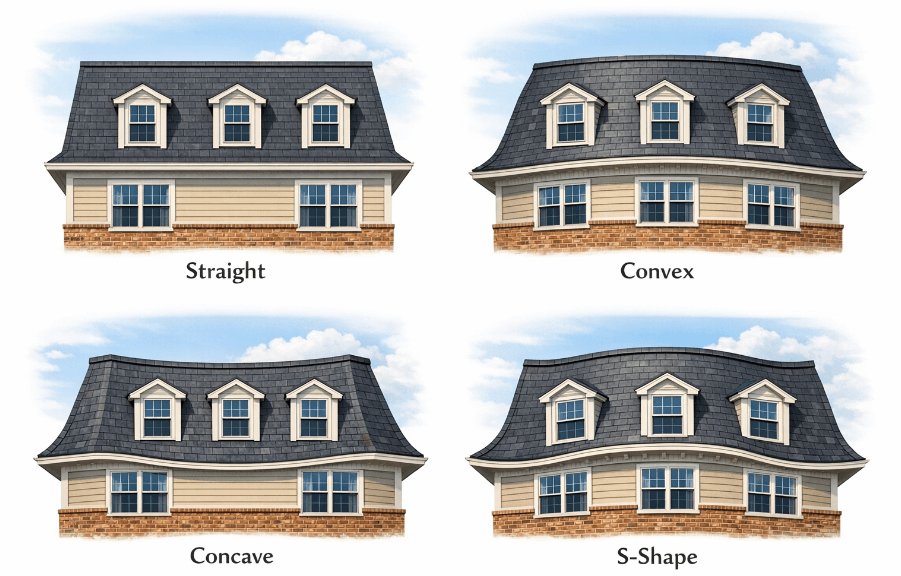
Straight:
A straight design is the most basic type of mansard roof, where the lower line forms an almost vertical bottom, while the top has a minor slope that isnt always visible, making it hard to see when you look at it from the ground; from my experience working with these roofs, this low-pitched upper section blends quietly into the structure, while the strong, straight lower face defines the classic mansard shape and keeps the focus on usable space rather than roof height.
Convex:
A convex design is similar to a straight design, but it clearly stands apart unlike a straight mansard roof because the bottom slope and lower slope gently curves outward to form an outward curve that looks like a bell. This convex style changes the overall roof form, giving the mansard roof a smoother style and balanced design, while improving area usage by creating most space within the area. From my experience working with historic homes, this option is often chosen when extra space is needed without altering the building’s visual balance, as the slope flows naturally from the lower bottom section and enhances both function and appearance.
Concave:
A concave mansard roof has a design where the lower slope curves inward from the bottom, creating a smooth curving profile that looks very elegant. Compared to straight and convex variations, this style is the opposite of convex because the slope bends inward instead of outward, which naturally reduces the amount of usable indoor space. From my experience, homeowners often choose this concave option for its refined appearance, even though the available space, when compared to other mansard roof variations, is more limited due to the inward design.
S-shape:
An s-shape mansard roof is a unique design that combines concave and convex styles, and in my experience working with different roofs, this s-shaped style always stands out for both function and appearance. It begins at the top with an inward curve, then transitioning through the middle to an outward curve before it goes down to the roof line, which creates a smart mix of form and use. This curve reduces the amount of space in the top half, but makes up for it at the bottom half, where the lower slope starts curving more openly, as this balance is what gives that flowing look and practical layout I often recommend for homeowners who want character without wasting interior space.
Choosing the Best Roofing Material for a Mansard Roof?
A mansard roof has a steep pitch, so choosing the right roofing materials is critical, especially when planning a mansard roof replacement, because weight and the likelihood of materials sliding off are real concerns if they are not properly installed. In my experience, while asphalt shingles are an option, they are often expensive in the long run due to wear, which is why I usually recommend a premium roof material like synthetic shingles or cedar shake shingles. Synthetic shingles, made from an engineered polymer or recycled materials, are lightweight, lighter than traditional options, last longer, and mimic the look of slate or cedar, making them a smart invest. Cedar shake shingles, crafted from natural wood such as cedar, offer a classic appearance, are also lightweight, and perform well when correctly installed, though they can be expensive depending on your budget. If you are set on a standard shingle, choosing a luxury shingle helps reduce the risk of failure, but deciding ultimately comes down to balancing performance, appearance, and cost.
Does the Top Portion Need a Different Roofing Choice?
A mansard roof is known for its vertical sides, and while those sides often use a specific roofing material, the top portion works a little differently; in real projects I’ve handled, when the pitch is above 2:12 units horizontal, the top can usually match the lower part, but when it drops below that line or becomes flat, the slope creates sitting water, which means a water-tight membrane system is required, commonly EPDM, PVC, or TPO, even though this area is not visible; you pick the membrane based on functionality, where white or light colors like TPO and PVC are reflective and help keep rooms cooler, while EPDM is a black rubber option that is extremely durable, very hard to penetrate, and often jokingly called bulletproof, making it a dependable solution for a low roof condition.
Why is a mansard roof replacement so expensive?
A mansard roof replacement is often pricey and expensive for more than one reason, and from hands-on experience, it is mainly due to the complex process involved. During a roof replacement, extra labor and time are required to do the job properly, especially because the lower portion has a steep pitch that cannot be safely walked on, forcing the crew to stand on ladders throughout the tear-off and installation processes. This makes the work slow, moving slower than standard roofs, which directly increases labor costs. In addition, materials are not basic, as choosing a premium roof system is often a strong recommendation, leading to high material costs. A membrane roof system is usually applicable on the top portion, and when all other roofing components are brought together, the entire setup becomes more expensive due to its overall complexity.
FAQs
What are the disadvantages of a mansard roof?
From hands-on experience, one key drawback is that a mansard roof can be Challenging in terms of maintenance because the flat upper slopes and detailed flashing demand frequent checks to prevent leaks and surface wear. In wet climates, the design is not always ideal, as poor drainage on the upper slope may lead to water pooling, while snowy or rainy areas can face ice buildup, increasing long-term upkeep risks.
What Is the Opposite of a Mansard Roof?
The opposite of a mansard roof is often called a bonnet or hip roof, a modified and least common roof style that I have found while working with old homes in French Vernacular architecture, where bonnet roofs have two slopes on four sides of the structure, and essentially reverse the usual style because the upper slope is more steeper than the bottom slope, unlike most slopes and sides seen on classic roofs, making this vernacular design less common but still considered a beautiful part of traditional building history.
Do Mansard Roofs Need Gutters?
Yes, mansard roofs typically need gutters because they allow rainwater and snowmelt to drain properly from the roofs, which helps prevent splashing directly onto exterior walls. From my experience working around these systems, well-placed gutters prevent splashing, avoid staining, reduce siding damage, and lower the risk of basement flooding, damage, and overall flooding, especially when snowmelt drain and rainwater drain are managed correctly along the exterior walls.
What Is Another Name for a Mansard Roof?
A mansard is often called a French roof, a widely used synonym, and from practical experience this also includes an American variation where lower pitches are nearly vertical, take a larger proportion than the upper pitches, and shape the overall roof design. In France and Germany, there is no distinction between gambrels and mansards, as they are both called mansards, while in the American context this variation still reflects the French influence through lower and upper pitches, their vertical form, and balanced proportion, which explains why the synonym is commonly used for gambrels and mansards in France and Germany.
