
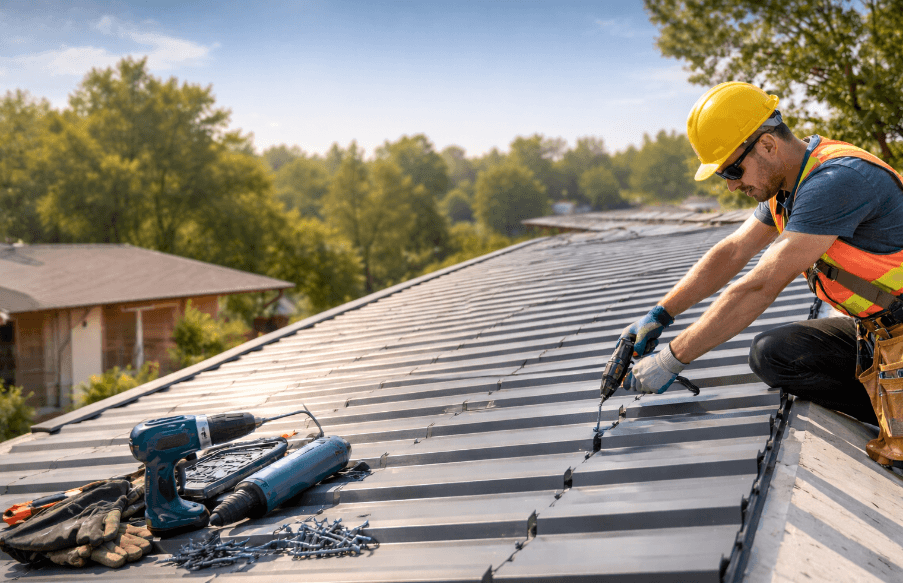
Steel roofing has become a popular choice due to its durability, energy efficiency, and aesthetic appeal. Whether you’re a DIY enthusiast looking to install steel roofing panels yourself or a professional contractor seeking a reliable guide, this comprehensive article will take you through every step of the installation process. Steel roofs provide protection against extreme weather while lowering your home’s energy costs by reflecting heat in the summer and retaining warmth in the winter.
Drawing from years of roofing expertise, this guide covers everything you need to know from preparation to final installation. We will walk you through essential tools, safety measures, and tips to ensure your steel roof lasts for decades. Whether you’re replacing an existing roof or installing a new one, proper installation is crucial for maximizing the longevity and effectiveness of your steel roof.
Why Choose Steel Roofing?
Choosing the right material for your roof is a big decision. Steel roofing offers multiple advantages that make it a top choice for homeowners and contractors alike:
- Durability: Steel roofs can last anywhere from 40 to 70 years, far outlasting asphalt shingles, which typically last only 15 to 20 years.
- Energy Efficiency: Steel roofing reflects sunlight, reducing cooling costs in summer by up to 25%. It also helps with heat retention in colder months.
- Weather Resistance: Steel is resistant to extreme weather conditions such as high winds, hail, and heavy snow, making it ideal for homes in regions with challenging climates.
- Sustainability: Steel roofs are made from recyclable materials and have a lower environmental impact compared to other roofing materials.
By choosing steel roofing, you invest in long-term benefits for your home. Whether you’re in need of a new roof or replacing an outdated one, understanding the proper installation process ensures you maximize these benefits.
Step-by-Step Guide to Installing Steel Roofing Panels
Tools and Materials You’ll Need
Before starting your steel roofing installation, make sure you have the necessary tools and materials to complete the job efficiently:
- Steel roofing panels (pre-cut to your roof’s measurements)
- Roofing screws with rubber washers (for waterproofing)
- Drill (with metal drill bits)
- Measuring tape
- Safety harness and ladder
- Roofing underlayment (optional but recommended)
- Chalk line (for alignment)
- Metal snips or cutting tool (for trimming panels)
Preparing Your Roof Deck
- Inspect the roof structure: Check the roof deck for any damage or instability before beginning. The deck must be strong and even to support the steel panels.
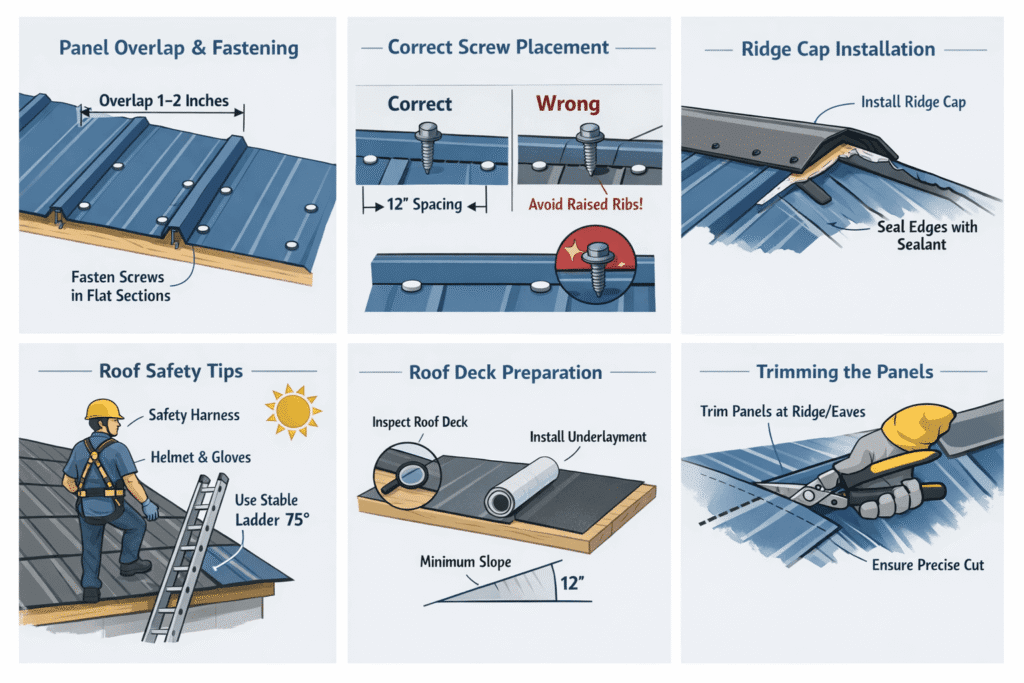
- Install underlayment: Underlayment acts as a secondary water barrier, ensuring that your roof remains protected from leaks. While optional, it’s highly recommended for extra protection.
- Check the slope: Steel roofing should be installed on a roof with a minimum slope of 3:12 (3 inches of vertical rise for every 12 inches of horizontal run). Make sure your roof meets this requirement for optimal water runoff.
Installing Steel Roofing Panels
- Start at the eaves: Begin by placing the first panel at the roof’s lowest edge. Align it with the eaves to ensure the panels are placed correctly.
- Secure the first panel: Fasten the first panel to the roof deck using roofing screws, ensuring that the screws are placed in the flat sections of the panel (not the raised ribs).
- Overlap the panels: As you move upward on the roof, overlap each subsequent panel with the one below it. This overlapping prevents water from entering between the panels and ensures a leak-proof roof.
- Align the panels: Use a chalk line to keep the panels straight and aligned. Proper alignment ensures that the roof has a neat appearance and functions correctly.
Fastening the Panels
- Screw placement: Fasten the panels with screws every 12 inches along the edges. Ensure the screws are placed securely but avoid over-tightening to prevent damage to the panels.
- Proper overlap: Ensure each panel overlaps its neighbor sufficiently to prevent water infiltration. A good overlap is essential to a watertight seal.
Final Touches
- Trim the panels: Use metal snips or a cutting tool to trim the panels at the ridge and eaves. Ensure a clean, precise cut for a professional look.
- Seal the edges: Apply roofing sealant along the seams, edges, and screw heads to ensure your roof is completely waterproof.
- Install ridge caps: Complete the roof installation by securing ridge caps along the peak of the roof. Ridge caps protect the top edge of your roof and add to the overall aesthetic.
Important Safety Considerations
Safety is a top priority when installing steel roofing panels. Here are some expert tips to ensure you stay safe throughout the process:
- Wear protective gear: Always wear a helmet, safety harness, gloves, and non-slip footwear to protect yourself from falls and sharp edges.
- Use a stable ladder: Ensure the ladder is positioned correctly and is stable before you climb. A ladder that’s angled at 75 degrees provides the safest angle for climbing.
- Avoid windy or wet conditions: Steel roofing can be slippery when wet, and working in high winds increases the risk of accidents. Wait for dry, calm weather to carry out the installation.
Common Mistakes to Avoid
Here are some common installation mistakes that can lead to poor performance or damage to your steel roof:
- Improper screw placement: Ensure that the screws are placed in the flat sections of the panels, not the raised ribs, to prevent leaks.
- Skipping the underlayment: Not using underlayment leaves your roof more susceptible to leaks. It’s always best to use it as an additional water barrier.
- Over-tightening screws: Tighten screws just enough to hold the panels in place. Over-tightening can damage the panels or underlayment.
Costs and Pricing for Steel Roofing Installation
The cost of installing steel roofing can vary based on factors such as roof size, material quality, and location. On average, here’s what you can expect:
- Materials: Steel roofing typically costs $2–$6 per square foot, depending on the type of steel and finish.
- Installation: Labor costs for installation range from $4–$10 per square foot, depending on roof complexity and contractor rates.
- Total cost: You can expect to pay between $6 and $15 per square foot for materials and installation.
For accurate pricing, it’s a good idea to consult with local contractors or visit nearby roofing suppliers.
Local Variations in Steel Roofing Installation
The installation process and material requirements can vary depending on where you live. Here are some regional factors to consider:
- Cold climates: In regions with heavy snow, such as the Northeast, consider using thicker steel panels or adding extra insulation to your roof to support the weight of snow and ice.
- Coastal areas: In areas like Florida, where saltwater can cause corrosion, use corrosion-resistant coatings for steel panels to prevent rust and extend the roof’s lifespan.
Be sure to consult local roofing experts who are familiar with the specific climate conditions and regulations in your area.
FAQs
Can I install steel roofing panels myself?
Yes, with the right tools and safety precautions, you can install steel roofing panels yourself. However, it requires careful planning and attention to detail.
How long do steel roofing panels last?
Steel roofing can last between 40 and 70 years, making it a long-term, cost-effective solution for your home.
What tools are needed for steel roofing installation?
You’ll need roofing panels, roofing screws, a drill, measuring tape, safety gear, and metal snips or cutting tools.
What is the cost to install a steel roof?
Steel roofing installation typically costs between $6 and $15 per square foot, depending on materials and labor.
Is steel roofing better than asphalt shingles?
Yes, steel roofing is more durable, energy-efficient, and resistant to extreme weather conditions, making it a better long-term option.
How do I fasten metal roofing panels?
Use roofing screws with rubber washers, placed every 12 inches along the edges of the panels.
Can I install metal roofing over shingles?
Yes, but it’s recommended to install a waterproof underlayment between the old shingles and the new metal panels to avoid moisture buildup.
Conclusion
Remember, steel roofing is an investment that will serve you well for decades, so don’t hesitate to get started with the process today.
