
Slate Roofing Types
Slate roof tiles are categorized as natural or synthetic, with their origin traced to regions like Welsh, Brazilian, and North American sources, and their design expressed through random width, graduated, and patterned layouts that shape modern slate roofs. In practice, natural slates are widely valued for longevity and rich color variations, including blacks, grays, greens, purples, and browns, while synthetics are offering alternatives made from fiber cement and composite materials. The best choice depends on budget, desired aesthetics, and regional availability, all impacting durability and appearance for homeowners who choose from numerous types best suited to their design preferences and location. Historically, natural slate roofing represented elegance and beauty, often recalling a magnificent northwest mountain range that added distinction and value to a home. At the same time, high installation costs, labor-intensive work, and susceptibility to cracking and breaking can discourage homeowners despite its long-standing appeal.
6 Unique Types of Slate Roof
Fortunately, manufacturers offer several other unique, aesthetically beautiful types of roof slates as reliable alternatives to natural slates, especially when weight or cost is a concern. Materials like fiber cement, bituminous, concrete, metal, and synthetic composite slate are engineered to deliver a slate-like appearance while improving consistency and ease of installation. From professional experience, these options work well when homeowners want the visual character of slate without depending solely on quarried stone.
1: Natural Slate
Fine-grained-foliated natural slate is formed from tightly bonded grains that include mica, chlorite, and quartz, appearing as small, irregular scales, flakes, and lens-shaped particles. This structure allows the stone to split into a thin slab, making it an attractive roofing product that both homeowners and architects consistently value for its natural textures and beautiful colors such as green, grey, red, purple, black, and brown. When properly maintained, it offers strong fire resistance, pest resistance, and moisture resistance, which is why a well-cared-for natural slate roof can last more than 100 years. In practice, I have seen older buildings where the original slate roof still performs better than many modern alternatives.
Despite its advantages, high cost remains a concern, as materials and installation often deter buyers. Installing natural slate weighing 800 pounds per square to 1,500 pounds per square requires an experienced contractor who specializes in slate roofing, since the weight makes it challenging to handle and may need extra structural support for the home or building, which add to installation costs. A slate roof costs 9 dollars to 16 dollars ft2 to install, making it the most expensive roofing material on the market, while slate shingles alone range from 500 dollars to 1700 dollars per square, depending on color, durability, and thickness. Items like underlayment, drip edging, and special tools for the job can add 100 dollars per roofing square, and labor costs range 600 dollars per roofing square, influenced by slope, pitch, and size of the home roof. Because slate is fragile, it can break during installation or after installation if walked on, and a broken slate tile needs immediate repair to prevent moisture damage, though replace work is difficult due to variations in each lot of slate tiles, making an exact match hard to find.
2: Fiber Cement Slate
Fiber cement slate roofing is a cheaper alternative to natural slate, commonly chosen for projects where costs and install efficiency matter, often ranging from $3 to $16 per ft2 depending on manufacturers, custom formats, and site needs. It is made when manufacturers produce slates using cement, sand, cellulose fibers, and other fibers, a process that before the 1980s sometimes included asbestos, which is no longer used. These slates come in a wide variety of factory-applied colors, including diamond-shaped designs, offering good water, fire, and insect resistance with a clean slate appearance. From field experience, the material performs well when regular inspections and maintenance are done, as instability in cement makes the roof prone to breakage, especially after long-term exposure to wind that can allow moisture to penetrate the structure and cause damage to the roof. To ensure the expected lifespan of 20 to 25 years, owners should plan for repainting every 10 to 15 years, adding more to long-term upkeep, but when managed properly, it delivers good durability and consistent performance over years.
3: Bituminous Slate
A bituminous slate roof is widely chosen by homeowners who want an inexpensive roofing option that still delivers a classic slate design pattern. The average cost ranges from $4 to $13 per ft.2 to install, depending on materials, roof size, and slope. Most manufacturers rely on bitumen and asphalt, the same base used in asphalt shingles, which means similar expected life spans, maintenance requirements, and installation processes. Unlike an asphalt shingle with a rough texture and sandpaper-like feel, bituminous slate offers a smooth surface that visually resembles natural slate, making bituminous slate roofing appealing for budget-focused projects.
From experience, one of the biggest advantages is flexibility, especially when working around eyebrow windows and domed roofs, where rigid slate struggles. However, damage can occur over time if the roofing system lacks proper design control. Improper installation reduces wind resistance, while evaporation and moisture cause volatiles in asphalt to dry, shrink, and crack, leading to craze-cracking and water infiltration beneath the roof system, resulting in building damage and loss of integrity and overall lifespan.
Performance also depends on internal composition, where pulverized stone, polymers, and fillers provide ductility, strength, and impact resistance. Too many or too few fillers create soft shingles, flexible shingles, or brittle shingles that may crease, fracture, tear, or pull at fasteners, especially during transportation damage and installation damage. Below the transition temperature, reduced ductile properties increase fractures, while high temperatures cause softening, followed by hardening during cooling, leading to burn-through spots and edge breakage. Loss of UV protective granules from the upper surface exposes the roof to UV rays, accelerating asphalt breakdown. Poor ventilation causes heat buildup and moisture buildup, damaging the felt roofing underlayment and ultimately resulting in reduced service life.
4: Concrete Slate
Concrete slate and concrete slate roofing are widely used as a cheaper alternative to natural slate, especially when homeowners want durability without the premium cost. Manufacturers produce it from a natural mixture of cement, sand, water, and oxide, which gives the tiles strength and uniformity. When I have reviewed these systems on real projects, I noticed that an energy efficient roof system with proper air circulation can noticeably reduce energy costs by limiting heat transfer into the attic, but this only works when the roof is properly installed.
From a performance standpoint, noncombustible concrete slate roofs handle severe weather well, offering solid impact resistance and durability through freeze thaw cycles, with a typical lifespan of 50 years. However, this durability depends on routine maintenance and sometimes extensive repairs to protect both appearance and structural integrity. Moss growth and mildew growth are common on concrete slate tiles in wet climates, making annual cleaning and professional power cleaning necessary. Homeowners must carry out regular roof inspection, especially after a severe weather occurrence, so damaged tiles receive immediate repair or tile replacement to prevent interior damage and maintain underlayment protection.
Over time, color fading occurs because of the tile’s porous nature, increasing staining risk and creating a clear repainting requirement, often requiring homeowners to repaint every couple of years to preserve aesthetic durability. While concrete roofing tiles can last decades, underlayment replacement is usually required after 20 years, a tedious project, time consuming process, and costly project, particularly on a 1500 ft2 roof, where underlayment cost can range between $5,400 and $7,660, with labor included. The high material weight of heavy concrete increases installation difficulty, often requiring structural reinforcement of the house structure. Additional concerns include algae growth, pressure washing, reliance on professional services, ongoing periodic maintenance, water absorption at a 13 percent absorption rate without proper waterproofing treatment, leading to mold formation, roof deterioration, added weight, pressure on structure, and long-term structural issues. Typical installation cost ranges from $3 per ft2 to $5 per ft2, which defines overall concrete slate roofing costs.
5: Metal Slate Systems
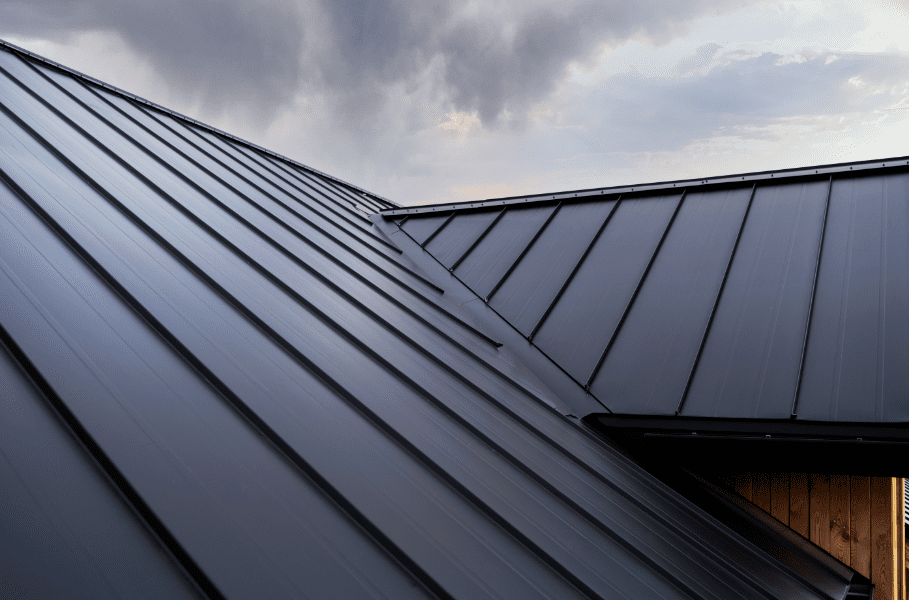
Metal slate roofing is widely selected when balancing performance and appearance, with costs usually between 6 and 12 ft.2 to install, depending on the roof slope, size, and materials used. From field experience, this option is often chosen for projects that demand eco-friendly and energy-efficient solutions while maintaining long-term durability. It naturally resists severe winds, moisture, mold, pests, and fire, giving it a lifespan lasting 40 to 70 years when correctly detailed.
Most manufacturers produce metal roofing as rigid sheets, typically made from zinc, copper, steel alloys, or expensive copper, formed into modular, press-formed, and vertical-seam panels that are painted or coated. Surface granules protect against scratching and denting caused by foot traffic, hail, and flying debris, which helps preserve overall integrity. However, performance can suffer as integrity quickly diminishes when exposed to excessive impact, extreme temperatures, harsh sun, and prolonged water exposure.
In practice, cooling causes the metal to contract, while heat thermally expands the metal roof, and this repeated contraction and expansion can degrade stack flashings around pipes and sealants, leading to roof leaks and early roof failure. Flying objects and hail storms can dent metal, where denting weakens the roofing, causing leaks, while rust may occur from ponding water or direct sunlight wearing down coatings, creating holes, scaling, and significant building damage or roof damage. To avoid ponding, only install systems on roof slopes of 3:12 or greater, because improperly installed systems with exposed fasteners increase risk, and excessive noise during heavy rain can further diminishes home or building indoor environmental quality.
6: Composite Synthetic Slate
Synthetic composite slate roofing tiles represent a modern type of slate roof built from advanced composite material, with well-known examples like Brava Old World Slate. This synthetic composite slate is designed as a lightweight composite slate, so it usually avoids the need for additional structural support, unlike natural slate roofing and concrete slate roofing. In real installations, this lightweight nature helps in saving time and saving money, especially when calculating cost, installation cost, install time, and labor per ft2. As a slate roof type within today’s roofing system, these roofing tiles offer clear benefits in handling structural load while improving overall performance.
From a durability perspective, this low maintenance synthetic slate delivers superior durability and strong resistance to UV rays, UV resistance, moisture, moisture resistance, foot traffic, temperature shifts, thermal movement, and impact, including high impact resistance and weather resistance. Compared with fiber cement slate roofing, bituminous slate roofing, and metal slate roofing, it better limits breaking, cracking, denting, and shrinking, which directly supports lessening maintenance costs and repair costs over its lifetime. In practice, this improves maintenance, reduces frequent repair, extends overall lifespan, preserves aesthetics, and ensures strong color retention with an elegant beautiful color, clearly standing out unlike concrete slate while maintaining reliable long term performance.
FAQs
What is the best slate for roofing?
Natural Welsh slate is widely regarded as the best option in the world because of its fantastic life expectancy of over 100 years, even under adverse weather conditions, which makes it ideal for unpredictable British weather. From long-term roofing performance to use in paving, cladding, and walling, this premium material offers unmatched durability, longevity, and resilience. Based on practical experience, its stone construction enhances exterior surfaces while supporting traditional heritage architecture through proven performance, climate resistance, and lasting structural value.
What is slate roof material?
Slate roof material uses Roofing slates shaped as roofing tiles from natural slate, a durable rock that is split into thin sheets and cut to the required size before shipment. This method contrasts with slabs that are milled into larger structural components, which is why roofing remains the primary product of the slate industry.
What is the difference between Spanish and Brazilian slate?
When comparing Spanish slate and Brazilian slate, the key difference lies in balance between cost and performance, especially when viewed alongside British slate as a premium option. From field experience, Spanish slate works as an affordable alternative with reliable performance, while still maintaining long-term durability for most residential roofs. Brazilian slate is a more budget friendly option, but it involves visible compromises in material consistency and overall durability, whereas British slate stands out for exceptional longevity and strong visual appeal.
Does Slate Crack Under Pressure?
Although slate is a hard rock known for long-term durability and withstanding harsh elements when first mined, its performance changes over time. Without proper maintenance, this natural stone can grow soft, becoming brittle and more likely to break easily due to aging, environmental exposure, or internal mineral composition changes. From practical roofing experience, most broken tiles result from foot traffic or being walked on without being careful, as slate’s hardness and material strength do not eliminate impact sensitivity, surface damage, or hidden structural weakness, even with good weather resistance.
