
When it comes to installing a metal roof, the fasteners you choose are just as important as the roofing panels themselves. Metal roofing fasteners secure your panels to the frame, protecting your home from the elements while providing a durable, long-lasting roof. Whether you’re a DIY homeowner or a professional contractor, it’s essential to understand how to properly install these fasteners. This guide will walk you through the installation process, helping you make the right choices and avoid common mistakes that could impact the roof’s performance.
Why Metal Roofing Fasteners Matter
Metal roofing fasteners are the unsung heroes of your roof. While the panels themselves are often the focal point, it’s the fasteners that provide the strength and security needed to keep the roof in place during harsh weather conditions.
Proper installation of roofing fasteners helps prevent leaks, maintains the structural integrity of the roof, and ensures that it can withstand wind, rain, and snow. Metal roofs, especially in regions with severe weather, require fasteners that can withstand constant exposure to the elements. Choosing the right fastener and installing it correctly is vital for achieving a weatherproof, stable roof.
Types of Metal Roofing Fasteners
There are several types of fasteners used for metal roofs, each suited to different roofing materials and installation types. Choosing the correct fastener is crucial to the success of your installation.
1. Self-Drilling Screws
Self-drilling screws are the most common type of fastener for metal roofs. These screws are designed to drill their own pilot hole as they are driven in, eliminating the need for pre-drilling. They’re ideal for wood and steel roofs and are quick to install.
2. Self-Tapping Screws
Self-tapping screws are similar to self-drilling screws, but they are typically used for attaching metal roofing to metal structures. While they also tap their own threads into the material, they require a pilot hole for proper installation.
3. Ribbed Screws
Ribbed screws are designed for corrugated metal roofing panels. Their design matches the ribbed structure of the panels, providing a secure fit. These fasteners are essential for ensuring the panels are firmly in place and can resist wind uplift.
4. Flanged Screws
Flanged screws have a large flange that distributes the pressure over a larger surface area. They’re particularly useful in heavy-duty applications where additional strength is needed.
Tools and Materials Required
Before beginning your metal roofing installation, make sure you have the right tools and materials on hand. Here’s a list of what you’ll need:
- Metal Roofing Fasteners (choose based on your roof material)
- Power Drill or Impact Driver
- Measuring Tape
- Roofing Panel
- Rubber Gasket Washers (to ensure a waterproof seal)
- Level (for straight panel alignment)
- Roofing Sealant (optional, for additional waterproofing)
Having all the tools and materials prepared before you start will ensure a smoother and more efficient installation process.
Step-by-Step Guide to Installing Metal Roofing Fasteners
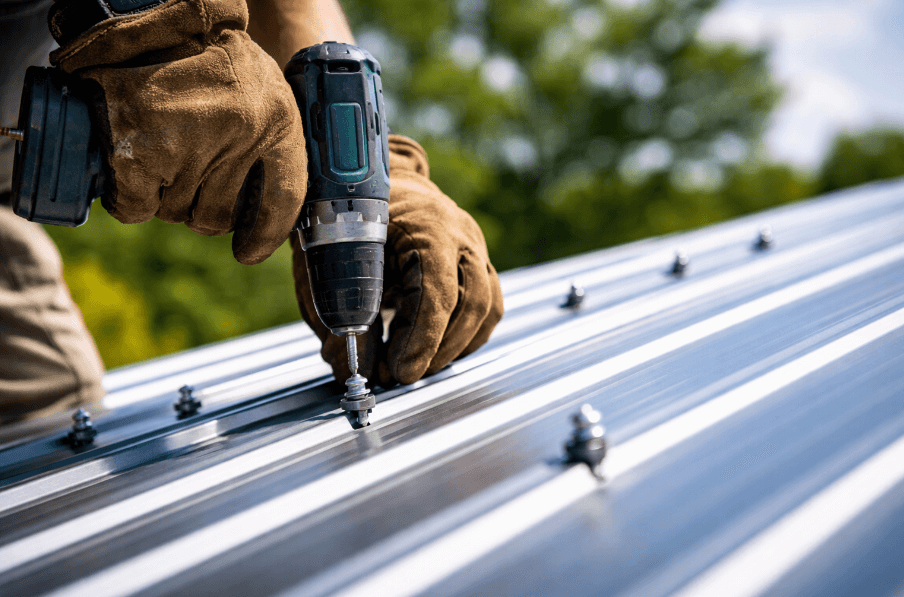
Here’s a detailed, step-by-step breakdown of the process to help you install metal roofing fasteners correctly:
Step 1: Prepare the Roof Surface
Ensure the roof surface is clean and free from debris. Dirt or dust can interfere with the sealing process, so make sure everything is clear to ensure proper installation.
Step 2: Choose the Right Fasteners
Selecting the right fastener is crucial. For wood or steel roofs, self-drilling screws are the best choice because they don’t require a pilot hole. For metal-to-metal installations, use self-tapping screws. Flanged screws and ribbed screws are essential for specific roofing types and applications.
Step 3: Mark Fastener Placement
Measure and mark where each fastener will go. Fasteners are typically spaced every 12 to 18 inches along the ribs of the metal panels. Correct spacing is essential for a stable, secure roof.
Step 4: Drill Pilot Holes (If Necessary)
If using self-tapping screws, drill pilot holes at the marked locations. The holes should be slightly smaller than the diameter of the screw to ensure a tight fit. If you’re using self-drilling screws, there’s no need for pilot holes, saving you time.
Step 5: Install the Fasteners
Place the fastener through the roofing panel and into the pilot hole. Tighten the screw until it’s secure, but be careful not to overtighten, as this could damage the panel or rubber gasket, leading to leaks. Ensure the rubber gasket forms a tight seal around the screw.
Step 6: Secure the Panels
Once all fasteners are in place, check that the panels are properly aligned and straight. Use a level to ensure the panels are correctly positioned. If needed, adjust the panels before finalizing the installation.
Common Mistakes to Avoid
While installing metal roofing fasteners may seem straightforward, there are a few common mistakes that can lead to long-term problems:
- Over-tightening fasteners: Tightening screws too much can crush the rubber gasket and cause leaks.
- Incorrect fastener selection: Using the wrong type of fastener for your roof material can cause instability and premature roof failure.
- Improper fastener spacing: Too much distance between fasteners can lead to an unstable roof, especially in high winds.
By avoiding these mistakes, you’ll ensure a long-lasting and secure roof.
Expert Tips for a Successful Installation
To ensure your metal roofing fasteners are installed correctly and will perform optimally, consider these expert tips:
- Use high-quality fasteners made of corrosion-resistant materials such as stainless steel or galvanized steel. These fasteners will last longer and resist rust over time.
- Install fasteners on the flat part of the panel, not the ribs. This helps to maintain the roof’s integrity and avoids damaging the panel.
- Check alignment frequently as you work. This ensures your panels are straight, preventing issues down the line.
- Use an impact driver for faster and more consistent installation, especially if you’re working with harder materials like steel.
Cost of Metal Roofing Fasteners
The price of metal roofing fasteners can vary based on the type and material. On average, here’s what you can expect to pay:
- Self-Drilling Screws: $0.50 to $1.00 each
- Self-Tapping Screws: $0.30 to $0.60 each
- Flanged Screws: $0.70 to $1.50 each
The total cost of fasteners for a large project will depend on the square footage of your roof and the number of fasteners required, which can range from 200 to 500 screws per 1,000 square feet.
Local Considerations for Metal Roofing
Local building codes and weather conditions can affect the installation of metal roofing fasteners. In areas prone to heavy winds or snow, such as coastal regions or mountainous areas, it’s essential to use heavy-duty fasteners designed for extreme weather.
For example, in California, roofing standards may require fire-resistant materials, while in Florida, you may need additional fasteners for hurricane-resistant roofing. Be sure to check your local building codes to ensure compliance.
FAQs
What is the best screw for metal roofing?
Self-drilling screws are the best for metal roofing because they eliminate the need for pilot holes and speed up the installation process.
How do you install metal roofing fasteners?
Drill pilot holes (if necessary), insert the fastener through the roofing panel, tighten without over-tightening, and ensure a proper seal with a rubber gasket.
How far apart should metal roofing screws be?
Fasteners should be spaced every 12 to 18 inches along the ribs of the panel for optimal stability.
What is the cost of metal roofing screws?
The cost typically ranges from $0.30 to $1.50 per screw, depending on the type and material.
Can you install metal roofing without screws?
It’s highly recommended to use screws for metal roofing, as they provide essential stability and prevent leaks.
How do I avoid leaks when installing metal roofing screws?
Ensure the rubber gasket is properly sealed, avoid over-tightening the screws, and apply roofing sealant for extra waterproofing.
Can metal roofing fasteners be reused?
Reusing metal roofing fasteners is not advisable, as they may not provide a secure seal after being removed and reinstalled.
