
Walking on metal roofs can be dangerous without the right knowledge and preparation. With smooth, slippery surfaces and the risk of falls, it’s crucial to adopt the proper safety techniques, use appropriate tools, and wear the right footwear. Whether you’re a DIY enthusiast or a professional roofer, this comprehensive guide will walk you through the best practices for walking on metal roofs, safety precautions to follow, and the right gear to use.
Why Is Walking on a Metal Roof Dangerous?
Metal roofs present specific hazards that you don’t find on traditional roofing surfaces. The smooth and often slick surface of metal panels can cause slips, especially in wet or icy conditions. Additionally, if you’re walking on a roof that’s steep or poorly maintained, you risk damaging the metal or the roofing structure.
Key dangers include:
- Slipping or falling: Metal surfaces become slick when wet or covered with frost, making it easy to lose your footing.
- Roof damage: Stepping incorrectly on seams or flashing can lead to dents or leaks, compromising the integrity of the roof.
- Falling objects: Carrying tools or materials on the roof without securing them properly increases the risk of falling items, which could cause injury or property damage.
Understanding these dangers is the first step toward ensuring your safety while walking on metal roofs.
Step-by-Step Guide: How to Walk on Metal Roofs Safely
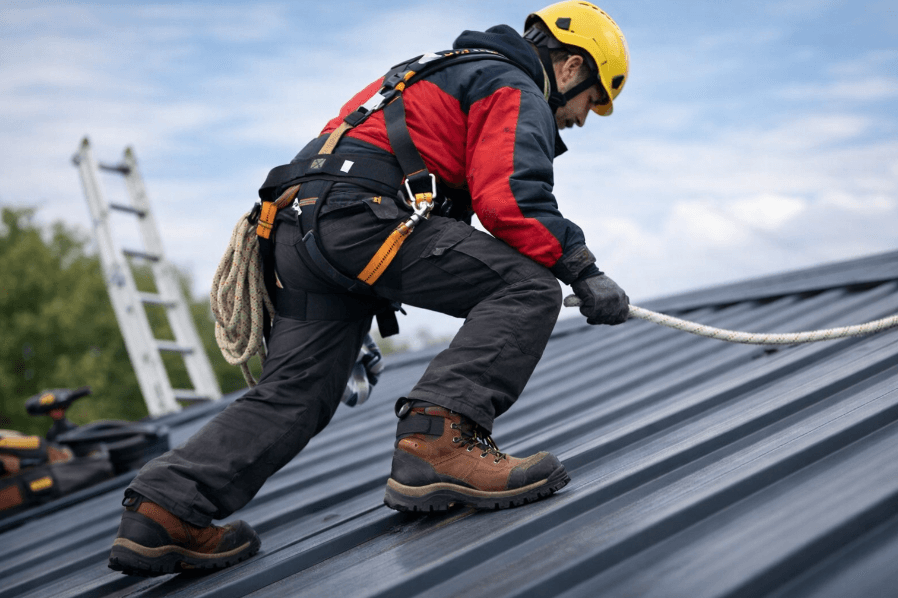
Walking on a metal roof requires caution, preparation, and the right gear. Here’s how you can ensure you stay safe:
1. Wear the Right Footwear
Footwear plays a critical role in your safety when walking on metal roofs. Look for boots designed specifically for roof work. The best roofing boots for metal roofs have the following features:
- Rubber soles: These provide grip, preventing slips on smooth surfaces.
- Waterproof materials: Protect your feet from the elements, especially when working in wet conditions.
- Insulated lining: This helps in colder weather, protecting you from cold temperatures and reducing the risk of slipping due to ice.
Popular roofing boot brands include Timberland Pro and Carhartt, which are known for their durability and grip.
2. Use Proper Safety Gear
Before you step onto the roof, ensure you’re equipped with the right safety gear:
- Harnesses and lanyards: Always use a safety harness, especially when working on steep or high roofs. The lanyard should be securely attached to a strong anchor point to prevent falls.
- Rope and rope hooks: For added security, using a rope as a secondary safety measure can help stabilize you as you move across the roof.
- Helmet: Wearing a helmet is a must, as it can protect you in case of a fall or an accidental hit from falling tools or debris.
3. Check Weather Conditions
Never attempt to walk on a metal roof when the weather conditions are not ideal. Wet or icy conditions increase the risk of slipping. Avoid roof work during:
- Rain
- Snow or ice
- High winds
Check the forecast before you climb, and wait for clear, dry weather if necessary.
4. Avoid Walking on Roof Seams
Metal roofs have seams that are often the weakest point of the structure. Walking directly on the seams can damage them or cause the roof to shift, compromising the entire roofing system. Whenever possible, avoid walking on seams, and instead, walk on the flat panels where the surface is more stable.
5. Stay Close to Support Beams
As you walk across the roof, always stay close to the support beams or trusses. These are the strongest parts of the roof and can offer more stability. Try to distribute your weight evenly and avoid overextending yourself.
6. Use Roof Access Ladders
Ensure you use proper roof access ladders for climbing onto the roof. The ladder should be placed securely at the base of the roof and extend far enough to provide a safe way to descend. Never try to climb onto the roof without a ladder that meets safety standards.
Understanding the Different Types of Metal Roofs
There are several types of metal roofs, and the surface type will significantly impact how you walk on them. The two most common types are:
Standing Seam Metal Roofs
- Surface: Smooth with raised seams.
- Grip: Provides better grip compared to other types due to the raised seams.
- Risk: These roofs are still slippery, especially when wet, so caution is needed.
Corrugated Metal Roofs
- Surface: Ridges and valleys.
- Grip: Generally more challenging to walk on due to the raised ridges.
- Risk: The valleys can trap water, making the roof more dangerous during rain or after a storm.
Safety Considerations for Metal Roof Walking
When working on any type of roof, safety is paramount. Consider the following:
OSHA Guidelines for Roof Work
The Occupational Safety and Health Administration (OSHA) provides safety standards for working on roofs. These include the use of:
- Personal protective equipment (PPE): Helmets, harnesses, and lanyards.
- Roof edge protection: Installing guardrails or using safety nets if working near roof edges.
- Fall protection: Ensuring proper anchorage for your safety harness and rope.
Local Safety Regulations
Different cities or regions may have specific regulations regarding roof work. Always check with your local authorities to ensure you’re compliant with safety laws. For example, in states like California, roofers need to follow stringent safety protocols due to the high number of roof-related injuries.
Tools for Safe Roof Access
In addition to boots and harnesses, there are a variety of tools that can help make roof work safer:
- Roof safety ladders: These ladders are designed to be used on rooftops, ensuring that you have a stable way to climb up and down.
- Roof jacks: These are used to support scaffolding or work platforms while working on the roof, offering additional stability.
Cost of Hiring a Professional Roofer
If walking on a metal roof isn’t something you’re comfortable with, hiring a professional might be the best option. Here’s what you can expect when hiring a roofing contractor:
- Roof inspection costs: Typically range between $150 to $500 depending on the complexity of the inspection.
- Roof repair or installation costs: Can vary greatly based on the size of the roof and the type of metal. The average cost ranges from $5,000 to $10,000 for a full roof installation.
Always get quotes from multiple contractors before making a decision.
FAQs
1. What is the best way to walk on a metal roof?
To walk on a metal roof safely, wear non-slip footwear, use safety gear such as harnesses and ropes, and avoid walking on seams.
2. How can I prevent slipping on a metal roof?
To prevent slipping, wear boots with rubber soles and walk on flat areas of the roof instead of seams. Avoid working in wet conditions.
3. Do I need a safety harness for walking on a metal roof?
Yes, a safety harness is essential when walking on a metal roof, especially if the roof is steep or high.
4. How do I walk on a steep metal roof?
On steep metal roofs, always use a rope and harness for additional safety. Stay close to the supports and avoid overreaching.
5. What shoes are best for walking on a metal roof?
Look for roofing boots with rubber soles, waterproof materials, and insulation for comfort and grip.
6. How much does it cost to hire a professional roofer?
The cost of hiring a professional roofer for inspection ranges from $150 to $500, while full roof installation can cost between $5,000 and $10,000.
7. What are the risks of walking on a metal roof?
The primary risks include slipping, falling, and damaging the roof. Always ensure you’re equipped with the proper safety gear to minimize these risks.
